EV battery: what lifespan really reassures?
Hi, it’s Xérian. To feel reassured, aim for a battery that lasts at least 8 years under warranty and a usable life often estimated between 10 and 15 years, depending on the model and usage conditions.
What lifespan should you expect from an electric vehicle battery?
A battery generally does not stop functioning after a fixed number of years. It gradually loses capacity, which slowly reduces range after several years.
In many cases, the lifespan of an EV battery is around 10 to 15 years. It’s a rough figure, not a promise: chemistry, climate, driving habits, and charging affect the result.
TEST IMMEDIATELY
- Ask for the battery health report, also called SOH, if you are buying a used car.
- Check the duration and mileage of the electric vehicle battery warranty.
- See if daily charging can be automatically limited to around 80%.
- Look for signs of heavy use: very frequent fast charging or prolonged parking in hot conditions.
- Compare the advertised range with what you expect for your trips, not just the new-vehicle figure.
A battery at 80% of its health retains about four-fifths of its original capacity. That doesn’t mean it’s out of service: it can still be suitable for many daily trips.
Battery degradation: what really changes over time
Battery degradation is gradual. The car may travel fewer kilometers between charges than at first, but this decrease does not necessarily translate into an immediate battery replacement.
Cold can temporarily reduce range, while repeated heat can accelerate wear in the long term. To better understand this factor, consult the effect of heat on batteries.
SOH, a useful reference for a used car
SOH expresses the remaining capacity relative to a new battery. An independent check helps compare two similar vehicles and avoid relying only on the on-board range displayed on the dashboard.
If it’s a new car… first check the warranty and the conditions that trigger coverage. If it’s an older model… request a battery diagnostic and estimate the range needed for your real trips.
Charging and charging cycles: the actions that count
Charging cycles correspond to the accumulated energy used: two half-discharges make up about one complete cycle. However, the number of cycles alone is not enough to predict EV battery longevity, as temperature and time spent at full charge also matter.
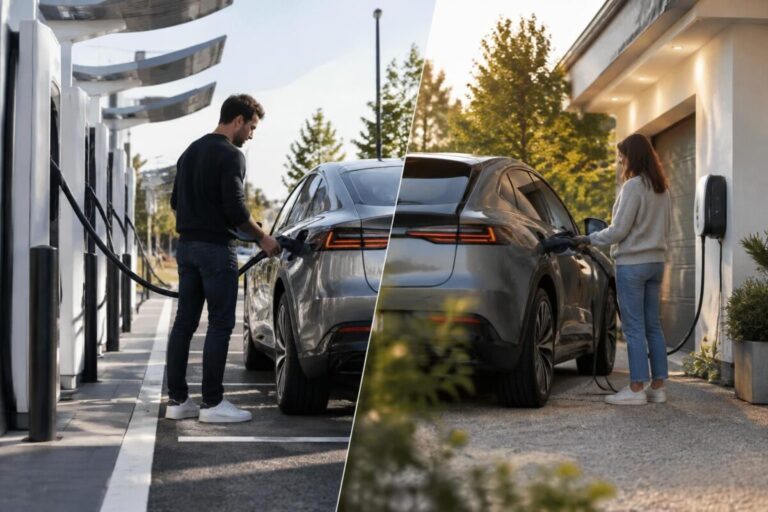
For daily use, a limit close to 80% is often suitable, if the manufacturer recommends it. A 100% charge remains useful before a long trip; avoid leaving the battery full for long periods when not necessary.
- Step 1: set a charging limit appropriate to the chemistry and the manual’s guidelines.
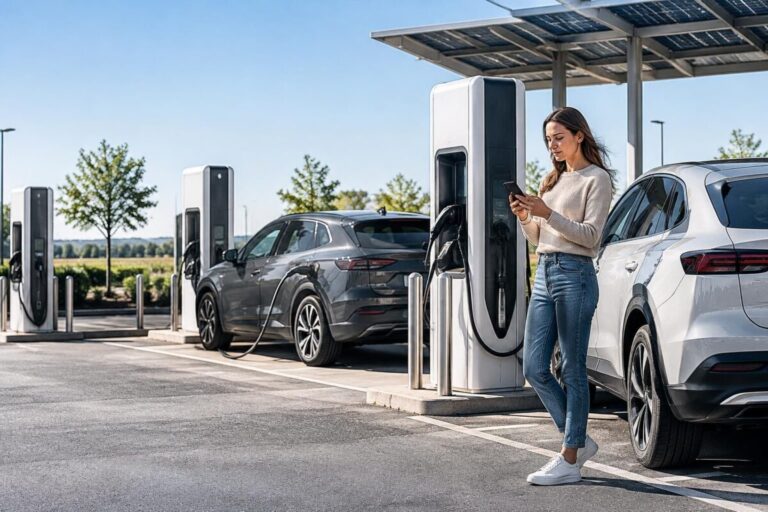
- Step 2: reserve fast charging for trips where it truly saves time.
- Step 3: in hot weather, choose shaded parking and schedule charging during cooler hours.
A common mistake is to think you must always charge slowly. In practice, occasional fast charging is built into vehicles; it’s mainly its intensive use, combined with heat, that deserves attention. These simple actions constitute reasonable battery maintenance without obsessive monitoring.
EV battery warranty: the safety net to check
Many manufacturers offer coverage around 8 years or 160,000 km, with differences depending on the brand and model. The minimum covered capacity is often set near 70%, but the exact conditions are in the contract.
Don’t just compare the duration. Also check the maximum mileage, the capacity threshold, the exclusions, and the country where the warranty applies. The new-generation battery and its promises do not replace these concrete verifications.
| Point to compare | Current benchmark | To verify |
|---|---|---|
| Warranty duration | Often around 8 years | Start date and applicable conditions |
| Mileage covered | Often around 160,000 km | Model-specific limit |
| Minimum capacity | Often around 70 % | SOH measurement method |
| Vehicle usage | Varies by contract | Exclusions and required maintenance |
The warranty provides reassurance, but it does not by itself determine the real lifespan. To choose according to your needs, also compare usable range and driving habits, as in this guide to comparing electric models.
Reliability of EV batteries and replacement cost
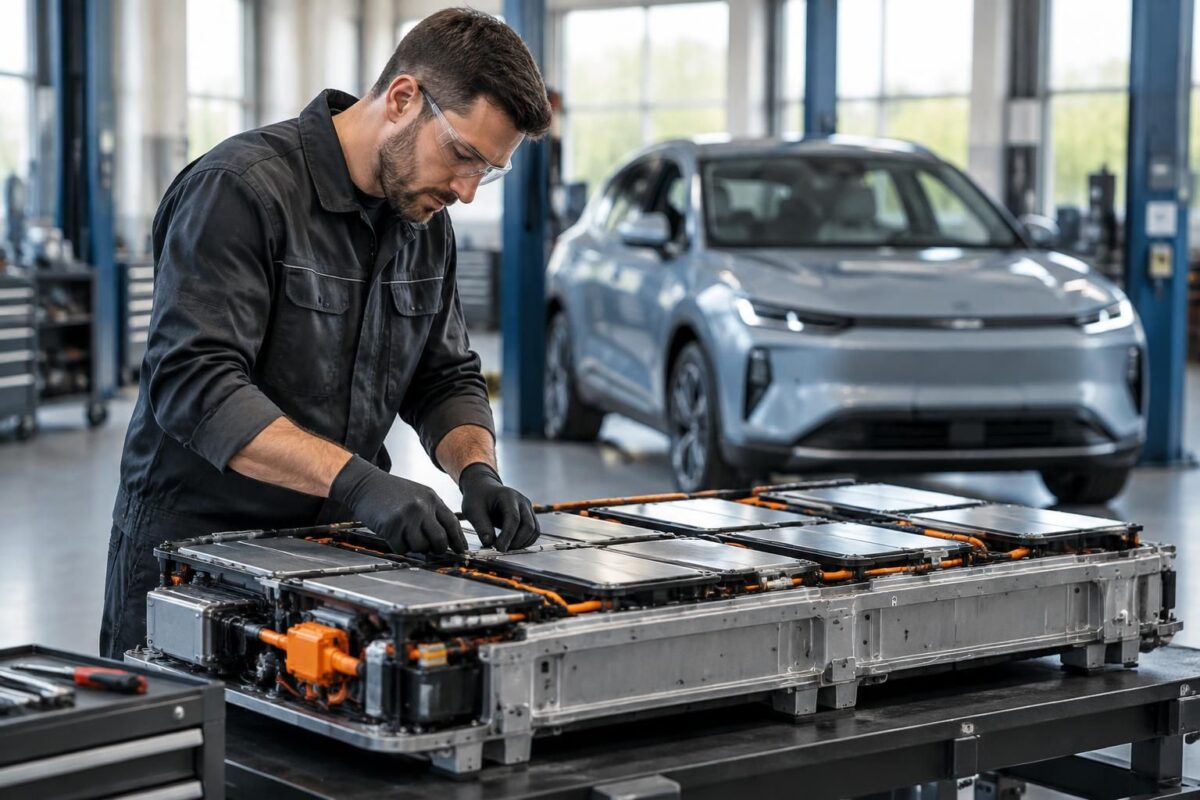
The reliability of EV batteries depends notably on their chemistry and the system that regulates their temperature. LFP batteries often tolerate full charges better than some NMC chemistries, but each model should be evaluated according to the manufacturer’s recommendations.
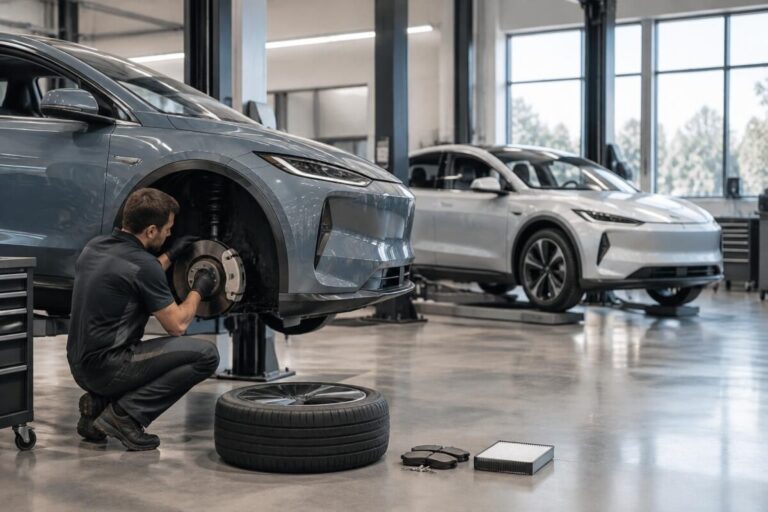
A full replacement can cost several thousand euros, with the amount varying greatly depending on capacity and the vehicle. Before considering this option, request a diagnostic: targeted repair or refurbishing may sometimes be explored by a specialist.
For a used vehicle, the SOH is also a negotiating point. A clear report helps better assess the car’s value and the daily usable range that will remain available.
Three steps to evaluate a battery before buying
Step 1: request the maintenance history and warranty documents. A vague answer about the battery’s condition should lead to an inspection, not a guess.
Step 2: have the SOH measured by a professional or with a tool compatible with the model. Compare the result to the manufacturer’s data, as measurement methods can differ.
Step 3: estimate the range needed for your usual trips, keeping a margin for cold weather and detours. A slightly worn battery can stay suitable if your use is mainly urban.
The lifespan that truly reassures isn’t a single number: it’s a readable warranty, a verifiable health status, and a usable range that matches your travel.
Can an electric car keep its battery for more than 10 years?
Yes, this is common in many usages. The capacity gradually decreases, but the vehicle can remain usable well after the warranty period, depending on its condition and the driver’s needs.
Should the battery be charged to 100% every day?
Not necessarily. For daily trips, a limit around 80% is often advised, depending on the model. A full charge remains practical before a long trip if the manufacturer allows it.
How to know the state of a used battery?
Ask for an SOH report or a diagnostic performed by a professional. Also check the observed range, the charging history, and the remaining warranty conditions.
Does fast charging damage the battery necessarily?
No. Occasional use is generally anticipated by the vehicle. Very frequent fast charging, especially in hot weather, can accelerate wear depending on the model and the situation.
Thanks for reading; Best regards; Xérian