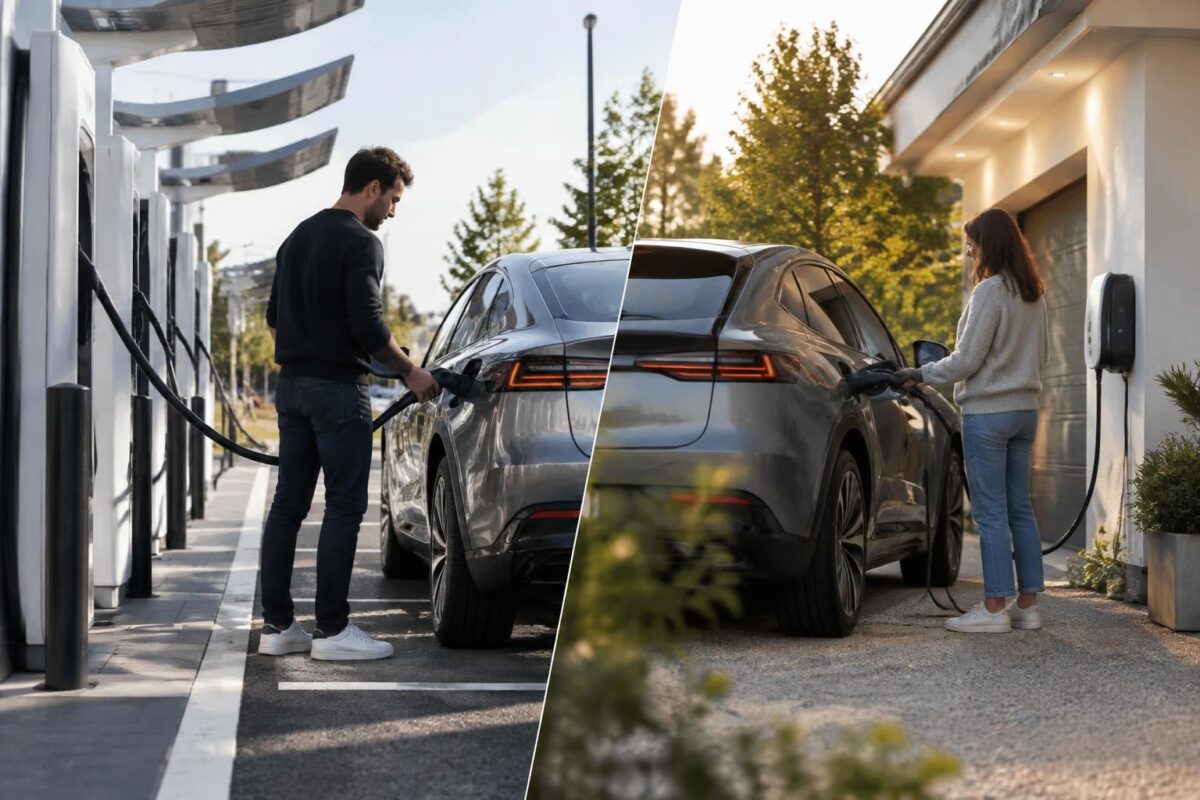
EV charging: fast on the go or simple at home?
Hi, it’s Xérian. For charging an electric vehicle, the simplest approach is to charge at home on a daily basis and keep fast charging for long trips. A household outlet may be enough if you drive only a little; a charging station provides more comfort if your needs are regular. Outside, public charging stations take over when you travel or can’t recharge at home.
Home charging or fast charging: which to choose?
Home charging is often the most practical and the least expensive solution for everyday trips. A daily recharge of around 6 kWh, about 34 km depending on the vehicle, costs about 0.75 to 1.50 €, depending on the tariff and the charging time.
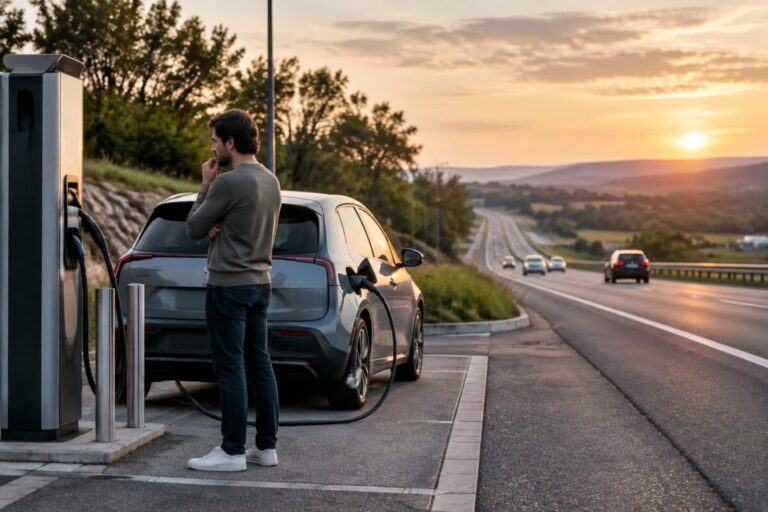
On the road, outdoor charging becomes useful for long distances, contingencies, or drivers without private parking. It saves time, but is often more expensive: it’s better to view these two options as allies rather than an exclusive choice.
TEST IT NOW
- Note the kilometers traveled during an ordinary week.
- Check if you have a private parking space with access to electricity.
- Look at the off-peak rate on your contract and schedule a nighttime recharge if it is advantageous.
- Identify public charging stations near your home, your workplace, and on your usual routes.
- Before an installation of a charging point, ask a qualified electrician to check your electrical panel and the power available.
Home charging: reinforced outlet or wallbox?
A standard household outlet can get you by, but it charges slowly and must be in good condition. For regular use, a reinforced outlet or a wallbox provides more comfort and safety, especially if the car stays parked for several hours each night.
A wallbox of 7.4 kW suits many households: depending on the battery and the vehicle, a substantial charge can be completed overnight. A 9 kVA meter is often suitable, but the other electrical equipment in the home also matters. A control system can reduce the power of the charging point when the heating or the cooking plates are in use.
To better understand everyday comfort, also discover how a charging point installed at home can limit charging stress is possible. The right equipment isn’t necessarily the most powerful: it’s the one that fits your parking situation and your pace.
| Solution | Indicative charging time | Suitable use |
|---|---|---|
| Domestic outlet, about 2.3 kW | About 2 hours 40 minutes for 6 kWh | Small daily need, occasional charging |
| Reinforced outlet, about 3.7 kW | About 1 hour 40 minutes for 6 kWh | Regular at-home charging, depending on installation |
| Wallbox, about 7.4 kW | About 50 minutes for 6 kWh | Frequent use and overnight charging |
| Public fast charger, DC | Often 20 to 40 minutes to reach about 80% | Long journeys and highway charging |
These durations are rough estimates: they vary depending on the model, temperature, the power accepted by the car, and the battery’s state of charge. The time displayed on a fast charger can also slow down as the battery nears full.
Installing a charging point: budget, power and safety
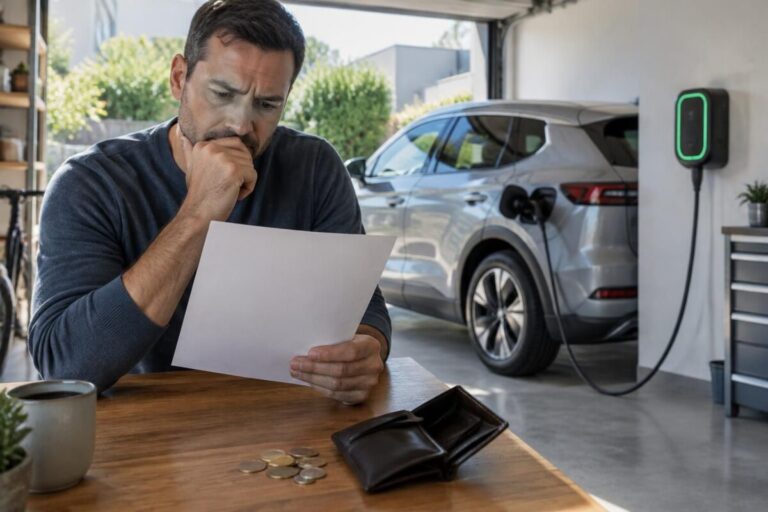
A wallbox typically costs €1,000 to €2,500 including hardware and installation, depending on the power and the complexity of the works. The tax credit for a charging point was removed for expenses paid from January 1, 2026; local subsidies or condominium schemes may still exist.
A practical detail is often forgotten: the power available at the meter is not enough by itself to determine the right equipment. The electrician should also check the panel, the distance to the parking, and the simultaneous uses in the dwelling. In an apartment, the right to the outlet may allow you to request installation on a private parking space, depending on the procedures applicable to the co-ownership.
Before signing a quote, compare costs and conditions: this point is detailed in this guide on the aids and the remaining amount to pay for a charging station. A well-sized installation avoids paying for a power you do not actually use.
Charging outdoors: when to use a fast charger?
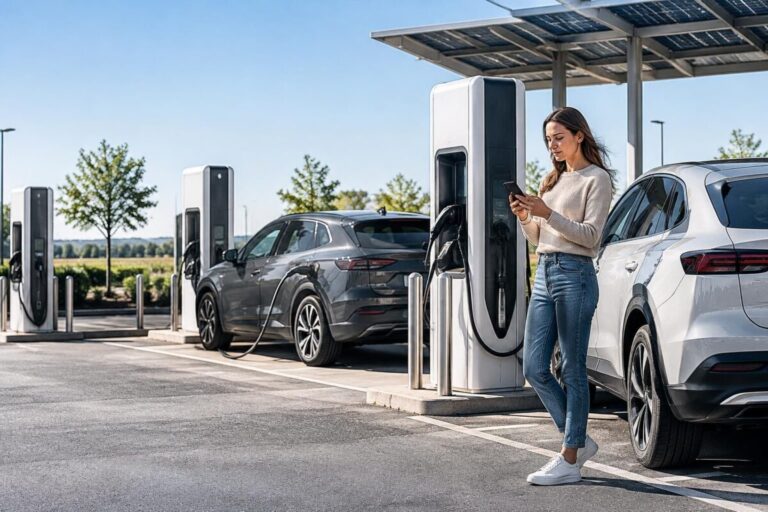
DC fast charging is especially useful when you need to get back on the road after a break. On highways, available powers are often between 50 and 350 kW, but not all cars accept them at the same level: the model, the battery temperature and its state of charge influence the result.
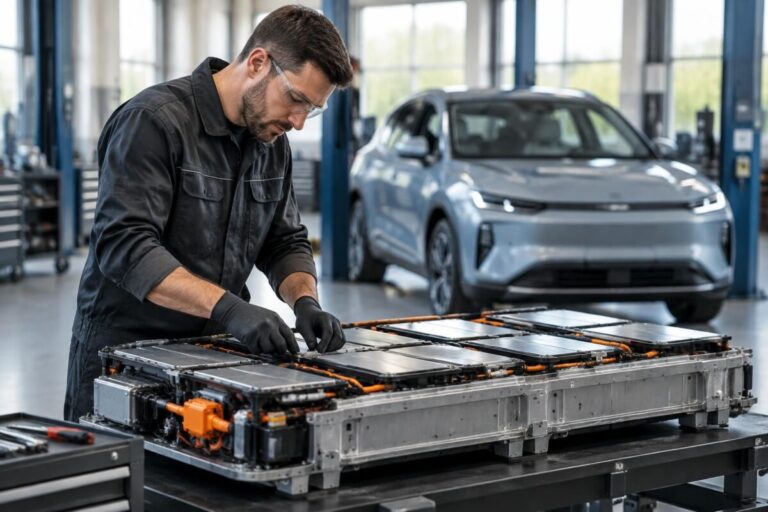
The public price varies by network and payment method; as a rough guide, fast charging can cost around €5 to €10 per 100 km. Daily, home AC charging is often cheaper. Using a fast charger occasionally is not a reason to worry about the battery: it’s best to follow the manufacturer’s recommendations and avoid leaving the car at an extreme state of charge for too long.
Before a departure, check the availability, power and price of stations along your route. These tips to avoid waiting at charging stations help turn a charging pause into a well-planned stop.
Two situations to choose without hesitation
If you mostly do short trips
If you mainly drive in the city and have private parking, a reinforced outlet or a wallbox can cover your needs without frequent stops at a charging station. The charging happens while the car is parked: it integrates into your routine rather than becoming a separate task.
If you frequently travel long distances
If you regularly do long trips or you don’t have home charging, public charging stations become a significant part of your organization. Plan the stops and leave margin for a busy or unavailable station; on a trip, this small precaution prevents many detours.
Organize your electric vehicle charging in three steps
- Step 1: estimate your needs based on your real trips and your vehicle’s consumption. The daily distance matters more than a theoretical full tank.
- Step 2: choose a solution at home, then have the electrical installation and the required power checked by a qualified professional.
- Step 3: locate fast chargers on your routes and compare their rates before departure. Keep them for trips where they truly save time.
Off-peak hours can reduce the cost of charging: the rate shown is €0.1589/kWh, versus €0.2001/kWh in Base option, according to tariff data provided for October 2026. The time windows vary by meter and may evolve; schedule the charger according to your contract hours rather than a general rule.
Practical questions before recharging
Does a domestic outlet suffice to recharge an electric car?
Yes, for a small daily need and if the outlet is in good condition. For regular use, a reinforced outlet or a wallbox is often more suitable; avoid a worn-out outlet or an improper connection.
Which charging point to choose at home?
A 7.4 kW wallbox suits many households, but the choice depends on the power accepted by the car, the electrical installation and driving habits. A qualified electrician can check the configuration.
Is fast charging more expensive?
Often, yes: the price depends on the network, the power, and the payment method. It remains particularly useful for long trips and highway charging.
What to do without private parking?
Locate public charging stations near you, your work, or your usual parking spots. In a condominium, check the steps related to the right to the plug and about available collective solutions.
Thank you for reading; Best regards; Xérian