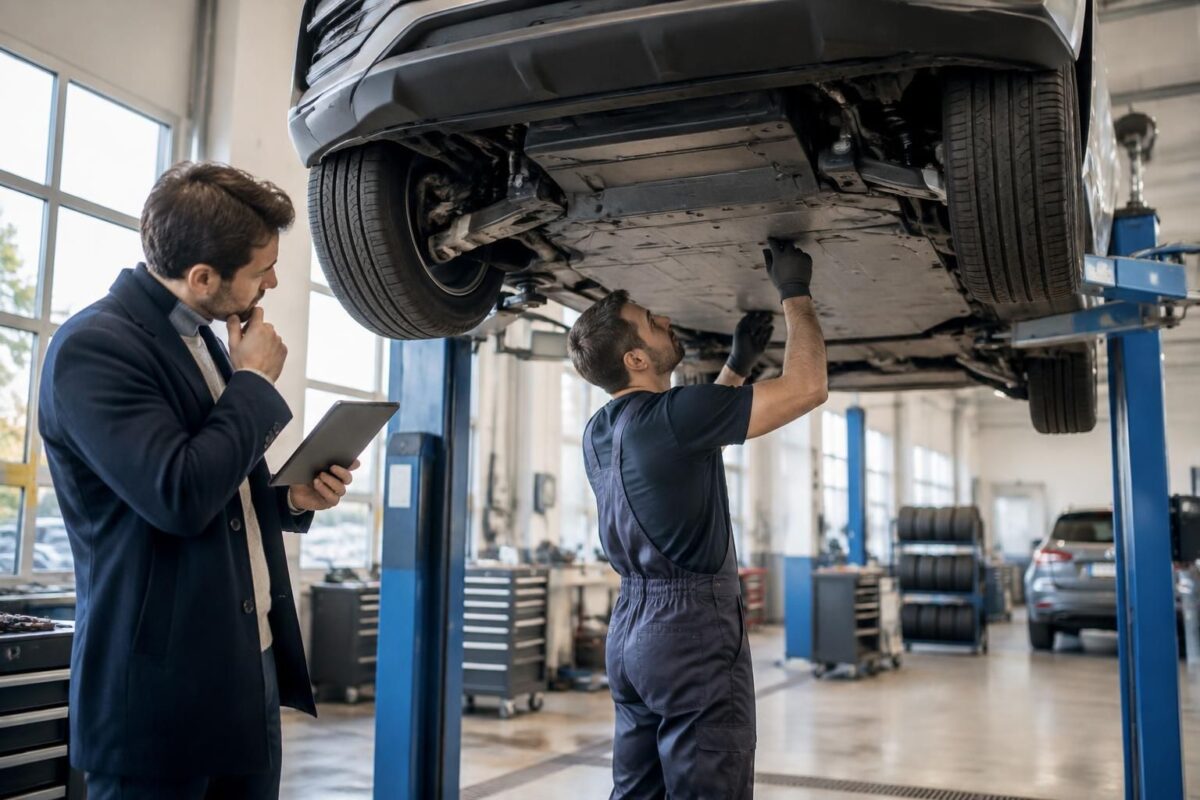
EV maintenance: neglected battery, resale more complicated?
Hello, it’s Xérian. Yes, a neglected battery can complicate the resale: request a battery diagnostic and keep the health report. A good charging routine and a clear maintenance history reassure buyers. A few simple gestures can protect the battery’s lifespan and resale value.
TEST NOW
- Check if the vehicle displays the battery health status or its estimated range.
- Find the maintenance invoices, repairs, and any diagnostic reports.
- Check tire pressure and look for any irregular wear.
- Review the charging settings and avoid leaving the car for long periods almost empty or at 100%, unless recommended by the manufacturer.
- If you’re selling soon, have the battery checked by a professional specializing in EVs.
Neglected Battery: What Effect Does It Have on the Resale of an Electric Vehicle?
A neglected battery does not automatically doom the sale. But if its condition is unknown, if the range seems abnormally low, or if the tracking is lacking, the buyer may negotiate more or walk away.
The SOH, or State of Health, compares the current capacity to the original. It helps evaluate the battery of an electric vehicle, but must be read alongside age, mileage, model and usage conditions. A single number does not tell the whole story.
To better understand normal variations by model, consult this guide on the lifetime of an EV battery. The key is to present verifiable elements, rather than promise theoretical range.
The Battery Diagnostic: A Concrete Argument for the Buyer
A recent report can reduce doubts and provide a clear basis for discussion. Its cost varies depending on the vehicle and the provider, but it can prevent an uncertainty from leading to a much larger negotiation.
If you are buying, request the report and check that it matches the vehicle presented. To prepare your questions, you can also read these points to check before buying an EV.
The Maintenance Actions That Protect the Battery and Resale Value
For daily trips, staying often in an intermediate charging zone, for example around 20 to 80%, is a practical reference for many models. This is not an absolute rule: follow the manufacturer’s guidelines, especially for batteries that require periodic full charging to recalibrate the indicator.
Prolonged heat also matters. When possible, park in shade and schedule charging to avoid a battery staying full for long periods in high heat. Fast charging is useful on trips; it is especially its very frequent use in hot conditions that deserves attention, depending on the model and thermal management.
- Use the charging limits recommended in the vehicle manual.
- Precondition the battery before a fast charging if the car allows it.
- Enable software updates and keep the service records.
- Have the cooling system checked according to the manufacturer’s schedule.
- Check tires and brakes: the weight of the EV can increase tire wear, even though regenerative braking often reduces brake work.
A common detail: after a fast charging, some drivers unplug without checking that the session has indeed ended. The charging receipt or the history in the app can nonetheless help document the vehicle’s use.
How to Prepare the Sale of an EV in Three Steps
- Step 1: gather the evidence. Gather the logbook and the maintenance history, invoices, repairs and any battery interventions. An orderly file makes the tracking more credible.
- Step 2: request a suitable inspection. Have the SOH measured by the manufacturer or a specialized workshop. Request a readable report and also check alerts, updates and the overall condition of the high-voltage system.
- Step 3: present the vehicle with transparency. Communicate the report, explain charging habits without exaggeration, and compare the price to similar models in terms of age, mileage and equipment.
The depreciation also depends on market trends, remaining warranty, actual range, and demand for the model. A well-maintained battery helps defend the price, but does not remove these other factors.
Two Scenarios to Decide What to Do
If it’s a sale in the coming months… have a diagnostic done and prepare the supporting documents before the first visit. A clear report is often more useful than a long list of good habits that are hard to prove.
If it’s a vehicle you keep for several more years… adopt an appropriate charging routine and follow the manufacturer’s maintenance plan. An annual or periodic check can also spot cooling, braking, or tire issues before they worsen.
Electric Vehicle Maintenance: Don’t Forget the Rest of the Car
The battery draws attention, but the overall condition also influences the resale. Tires, brakes, air conditioning, software, bodywork and the charging operation count toward the impression left on the buyer.
An EV generally requires fewer engine operations than a gasoline model, but it still requires maintenance. To identify expenses to anticipate, see these signs that can push up the maintenance budget.
| Point to check | Why it’s useful for resale | Simple action |
|---|---|---|
| Battery health status | Gives a reference for available capacity | Ask for a recent diagnostic report |
| Maintenance history | Shows the vehicle’s servicing | Gather invoices and reports |
| Tires and brakes | Avoids an immediate expense for the buyer | Have pressure, wear and operation checked |
| Charging and software | Confirms that essential uses work | Test charging and check updates |
Common Questions About the Battery and the Resale of an EV
Does a neglected battery necessarily make an EV hard to resell?
No. The sale remains possible, but an unknown health status, an inconsistent range, or incomplete tracking can worry buyers and weigh on the negotiation. A diagnostic and supporting documents provide concrete elements.
What SOH level is acceptable for a used electric vehicle?
There is no universal threshold valid for all models. Compare the result to age, mileage, warranty and the manufacturer’s data, then seek the advice of a professional if the report reveals an imbalance.
Should you avoid all rapid charging to preserve the battery?
No. They are useful for long trips. For regular use, a less powerful charging may suffice, while heat, frequency and model-specific guidelines must be taken into account.
What should you provide to the buyer when selling a EV?
Present the maintenance history, invoices, any battery diagnostic reports, warranty information and useful documentation on charging or repairs.
Thank you for reading; Best regards; Xérian