EV models: which car costs less to keep?
Hi, it’s Xérian. The Dacia Spring is the cheapest to buy, while the Citroën ë-C3 can come out cheaper after incentives: keeping it depends mainly on your mileage, charging and depreciation. In the city, a small battery is often enough and keeps the starting budget down. For frequent trips or on the highway, a more versatile car can avoid costly compromises. So compare the price actually paid, the insurance, energy, maintenance and resale value, not just the displayed price.
TEST IT NOW
- Record your kilometers driven each week and the share of trips on the highway.
- Ask for the post-subsidy price you are actually eligible for.
- Compare two insurance quotes with the same coverage and the same deductible.
- Check the home charging rate and at your usual charging stations.
- For a used car, request a battery health diagnostic.
Which electric car costs the least to own?
The cost of ownership combines the purchase price, energy, insurance, maintenance and depreciation. The Spring is an economical option if your trips are predominantly urban. The ë-C3 can be more interesting if you obtain a net price reduced by incentives and you need more range.
Prices shown in this comparison are starting benchmarks, not quotes: finishes, promotions and applicable incentives can change the result. In particular, the catalogue price does not always match the amount paid after deductions of the schemes to which your household is eligible.
Electric car comparison: price, range and usage
| Model | Indicative catalogue price | WLTP range | Budget considerations |
|---|---|---|---|
| Dacia Spring | From €16,900 | About 225 to 315 km WLTP depending on version | Low purchase price, especially city-friendly |
| Citroën ë-C3 | About €23,300 | About 320 km WLTP | Can become very competitive after eligible incentives |
| Renault Twingo E-Tech | Around €19,490 | About 263 km WLTP | Urban format and affordable starting price |
| MG4 | Around €22,990 | Up to about 450 km WLTP depending on version | More versatile, but price and insurance should be checked |
| Hyundai Inster | Around €25,000 | Up to about 370 km WLTP depending on version | More versatility for a higher budget |
Be mindful of range figures: a WLTP value is not a promise of highway range, especially in cold weather. To choose according to your trips, also consult these tips for comparing the autonomy of EV models.
Maintenance costs and electricity consumption: expenses to expect
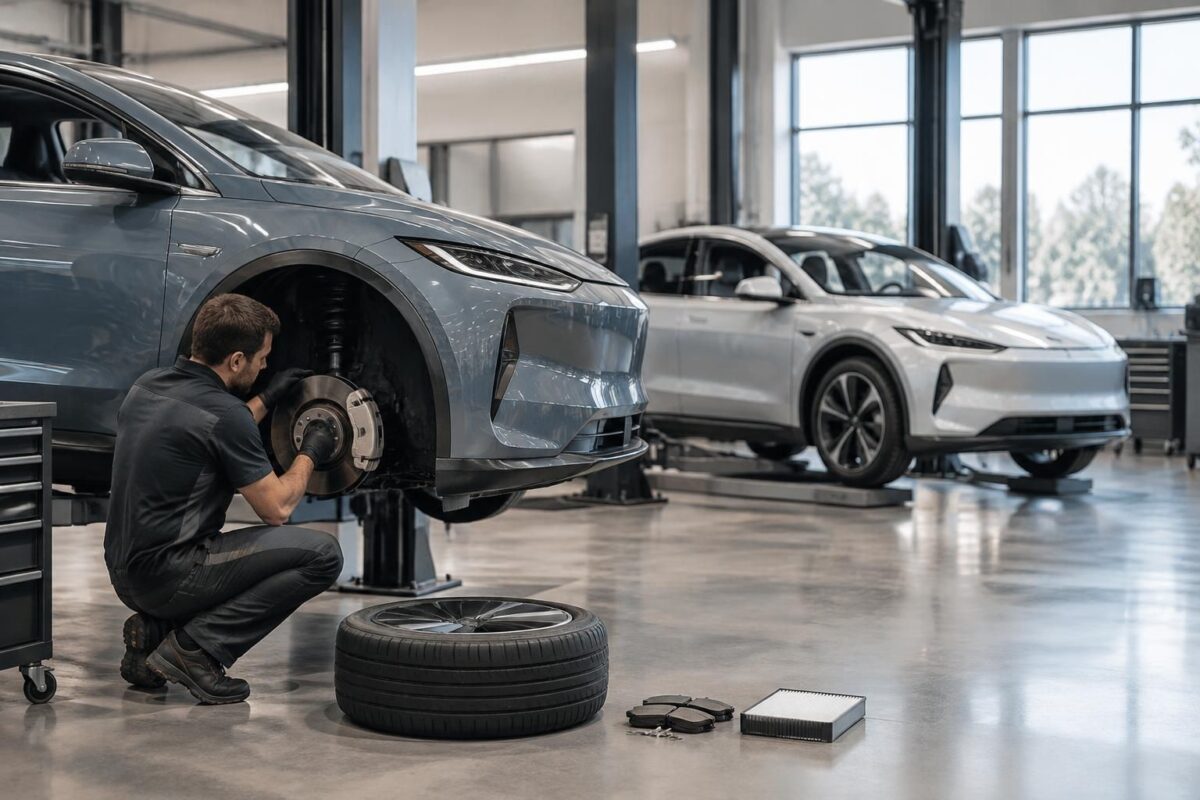
Maintenance of electric vehicles often requires fewer interventions than a combustion engine maintenance: no engine oil changes or timing belts. Tires, brakes, cabin air filter and the 12 V battery still need monitoring. Maintenance costs can be lower by about 20 to 30% depending on the model and usage, but repair prices vary a lot from one garage to another.
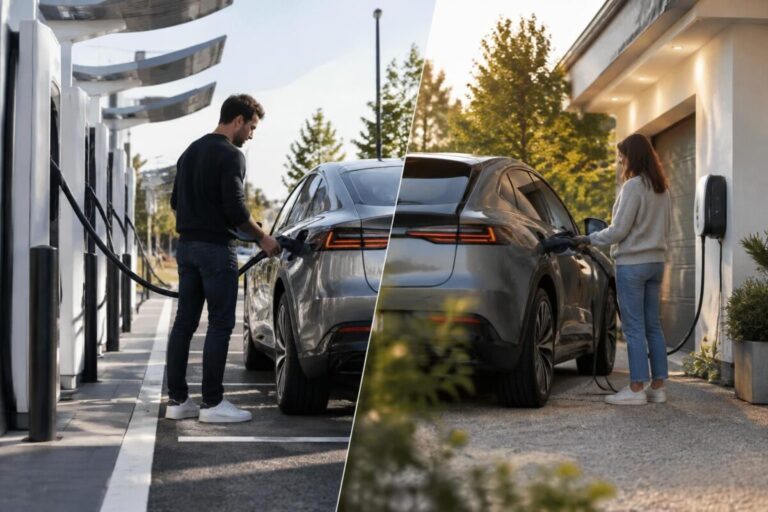
Electricity consumption also weighs in the calculation. A home charging is often cheaper than fast public charging, but the rate depends on your contract and the time of day. Think to compare the cost on your real trips: a cheap car that frequently recharges on the highway may lose part of its advantage.
The battery of an electric car deserves special scrutiny on the used-car market. Ask for a SOH battery health diagnostic, check the maintenance history and verify the remaining warranty. A used Spring can show an attractive entry price, but the battery condition and maintenance history matter more than a small price difference.
Insurance, depreciation and home charging
Insurance for a small electric city car averages around €1,000 per year, with large differences depending on the driver, the city and the guarantees. Get a quote before signing: some differences between models can surprise, even when their catalogue price is close.
Installing a home charging point adds an initial cost, while charging on a suitable outlet may suit some light drivers. Depreciation is another sensitive item: some models can lose nearly half of their value in a few years. For choosing between a compact and a family car, also compare the expected resale value with this comparison of depreciation for EV formats.
If you are hesitating between a city car and a larger car, look at the total cost projected over the time you plan to keep it. A compact body is often cheaper to buy, but too little range can complicate long trips.
Catalogue price or net price: incentives can change the ranking
The catalogue price is the price shown before incentives and trade-ins. The net price corresponds to what remains to be paid after incentives actually obtained. Thus, the ë-C3, more expensive on the label than the Spring, can come ahead at the net price in certain situations. The amounts announced remain subject to the rules in force and the eligibility of the vehicle and the household.
French incentives depend notably on criteria related to the vehicle and its manufacture. Imported models may thus lose part of their apparent advantage if an incentive does not apply. Check the amount confirmed by the seller and the official conditions before building your budget.
The social leasing announced for reopening on 16 July 2026 targets households under an income ceiling and certain workers with long professional trips. The rents, eligible models and criteria must be checked at the time of application. A low monthly payment is not enough: also consider the duration, included mileage and any fees.
Two scenarios for choosing without overpaying
If it’s mainly for the city, and you can recharge easily and your daily trips stay short, the Spring can limit the initial budget. A test drive on your usual streets also helps verify comfort and trunk space.
If it’s to drive often outside the city, the ë-C3 or a more autonomous compact may be more suitable. The price paid after incentives, fast charging and the cost of long trips become more important than the entry price.
Choosing your EV model in three concrete steps
- Step 1 — Describe your usage. Note your annual kilometers, your longest trips, the number of passengers and the possibility to recharge at home.
- Step 2 — Calculate the total cost. Add up net price, insurance, charging, maintenance and the charging point if any, then estimate resale value. To dive deeper into maintenance, see this comparison of models by their post-purchase cost.
- Step 3 — Try it and verify. Take a test drive in conditions close to your daily life, compare written offers and, if possible, have the SOH of the battery checked.
A detail often overlooked: the advertised price for a fast recharge does not always reflect the price at home. Estimate separately the two usages to avoid underestimating your electricity consumption.
Car savings pay off over time
An electric car can reduce energy costs and simplify maintenance, but none wins in every case. The right choice is the one whose net price, useful range and recurring expenses match your daily life. To estimate whether home charging improves the calculation, here is a comparison of EVs according to home charging.
When buying used, prioritize a clear history and a battery diagnostic rather than an attractive price without supporting documents. When buying new, check incentives, warranties and the cost of insurance before comparing monthly payments.
Frequently asked questions about EV ownership costs
Which electric car costs the least to buy?
The Dacia Spring is among the cheapest new electric cars at catalogue price, around €16,900 depending on the version. The net price depends on the incentives available and promotional offers.
Can the Citroën ë-C3 cost less than the Spring?
Yes, in some situations, the price after incentives of the ë-C3 may be lower than that of the Spring. Check your eligibility and the confirmed amount before comparing the two offers.
Does an electric car cost less to maintain?
Maintenance is often cheaper than with a combustion model, as several mechanical operations are absent. Tires, brakes, 12 V battery and repairs remain to be budgeted.
What should I check before buying a used electric car?
Ask for a SOH battery diagnostic, check the maintenance history and verify the remaining warranty. Also compare the price of insurance and the actual range truly suited to your trips.
Thanks for reading ;Best regards; Xérian