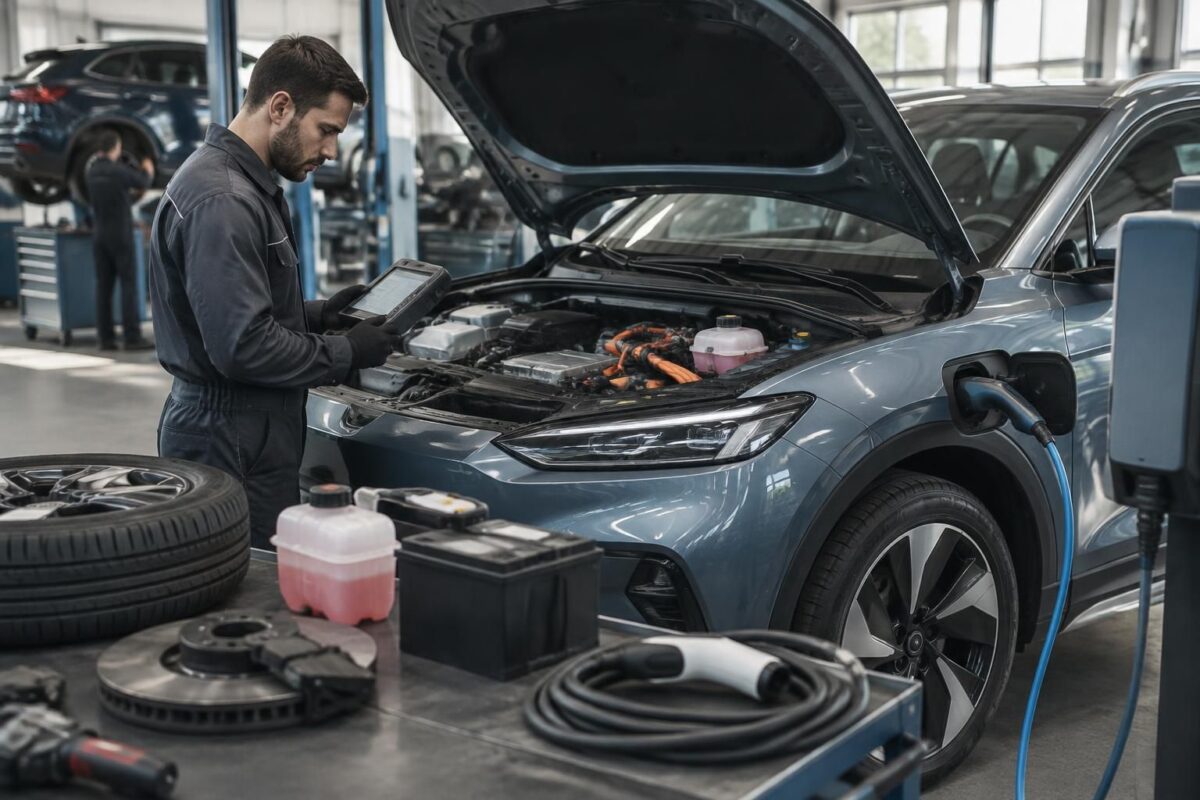
EV maintenance: quick check-up or things overlooked afterward?
Hello, it’s Xérian. A quick check is only enough if it follows the maintenance schedule and covers safety, the battery, and charging.
On an electric vehicle, not needing an oil change doesn’t mean it needs no maintenance. Tires, brakes, fluids, and software updates still need to be monitored.
The right approach: check what has been inspected, what’s coming due, and what needs to be handled by a professional.
Intervals vary depending on the make, model, and usage. The maintenance schedule remains the reference.
CHECK IMMEDIATELY
- Check the maintenance schedule and note the next due date or mileage.
- Check tire pressure and wear, especially if the vehicle pulls to one side or uses more energy.
- Test the lights, windshield wipers, and washer fluid.
- Ask whether the inspection includes the brakes, coolant, and 12 V battery.
- Ask for written confirmation of what was checked and what will need attention later.
Quick electric vehicle service: what should it include?
A short service visit can be useful, but its value depends on what it covers. A quick look at the tires is no substitute for the checks specified by the manufacturer, particularly for the braking system or electrical circuits.
The electric motor eliminates some conventional tasks: no engine oil changes, spark plugs, or timing belt. However, electric vehicle maintenance includes checks related to safety, comfort, and charging.
Checks you shouldn’t overlook
Ask the garage to specify what was actually inspected. A useful check-up covers the items below, depending on your model’s maintenance schedule.
- Tires: pressure, even wear, and possible rotation. The vehicle’s weight and torque can accelerate wear.
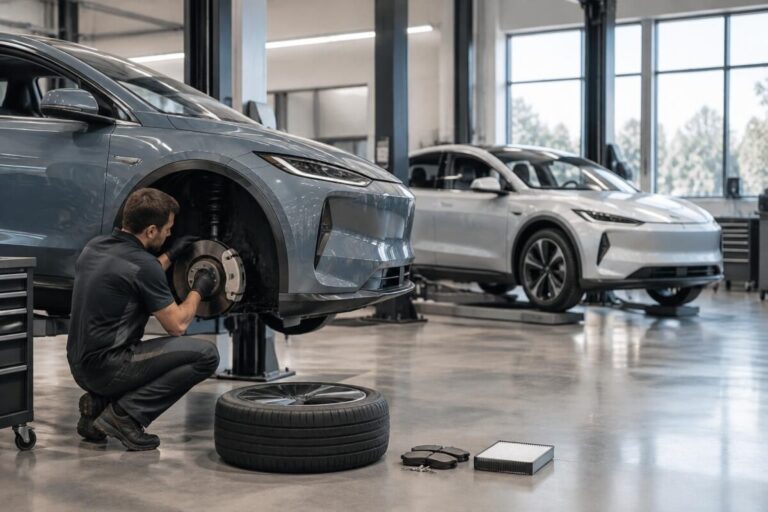
- Brakes: pads, discs, and calipers. Regenerative braking often reduces their use, but it doesn’t make them wear-proof.
- Fluids: check the brake fluid and, depending on the model, the battery coolant.
- Cabin air filter: it affects air quality and can be overlooked during a quick visit.
- Battery: check the 12 V auxiliary battery and, if specified in the maintenance schedule, run a diagnostic on the traction battery.
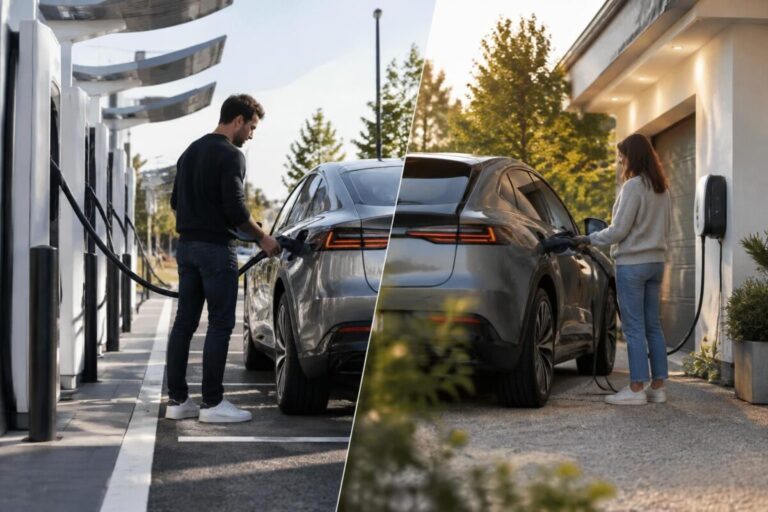
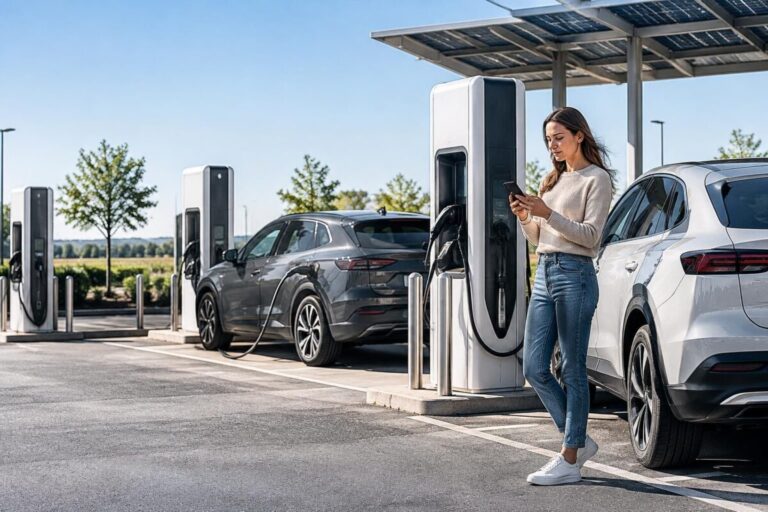
- Charging and software: inspect the charging port and flap, then check for recommended software updates.
- Safety components: lights, windshield wipers, steering, and suspension.
One common oversight is the brakes: they may wear very little in city driving thanks to energy recovery, but the discs and calipers still need to be kept in good condition.
Quick check or full service: how do you decide?
A quick visit is suitable for a targeted check between scheduled services, for example before a long trip. It doesn’t replace the periodic service if the maintenance schedule calls for a diagnostic or the replacement of a consumable.
Service intervals vary by make: some models require an annual visit, while others need to be serviced every two years or according to mileage. Even if the car is driven very little, time matters for certain components, such as brake fluid.
| Item | What to check | When to act |
|---|---|---|
| Tires | Pressure, tread depth, and uneven wear | Regularly and before a long trip |
| Brakes | Condition of the pads, discs, and calipers | At a service or as soon as a noise appears |
| Cabin air filter | Due date and condition | According to the maintenance schedule and driving environment |
| Brake fluid and coolant | Level, condition, and scheduled service interval | According to the manufacturer’s recommendations |
| 12 V battery and charging | Accessory operation, charging port, and connectors | If a warning appears or during a scheduled inspection |
These guidelines don’t replace the instructions specific to your vehicle. To better understand the consequences of incomplete maintenance, also read this article about neglecting the battery and reselling an EV.
The three-step process to make sure nothing is overlooked
- Step 1: Open the maintenance schedule or the manufacturer’s app. Note the due date, required service tasks, and any alerts shown on the dashboard.
- Step 2: Have the tires, brakes, fluids, cabin air filter, and auxiliary battery checked. Explicitly ask whether a traction battery diagnostic is planned or needed.
- Step 3: Get a written report. Separate the work that needs to be done right away from what can wait until the next service.
Which checks shouldn’t be postponed?
A red warning light, a sudden loss of power, unusual braking, or difficulty charging calls for a prompt inspection. Don’t continue driving if the vehicle seems unsafe to operate.
By contrast, a worn windshield wiper blade or a faulty bulb may sometimes wait a short while, but not if it affects visibility or compromises safety. Preventive maintenance is mostly about spotting signs of wear early.
If it’s a battery or high-voltage warning, contact a qualified professional and don’t attempt to work on it yourself. If a tire is slightly underinflated, correct the pressure promptly and check whether it drops again.
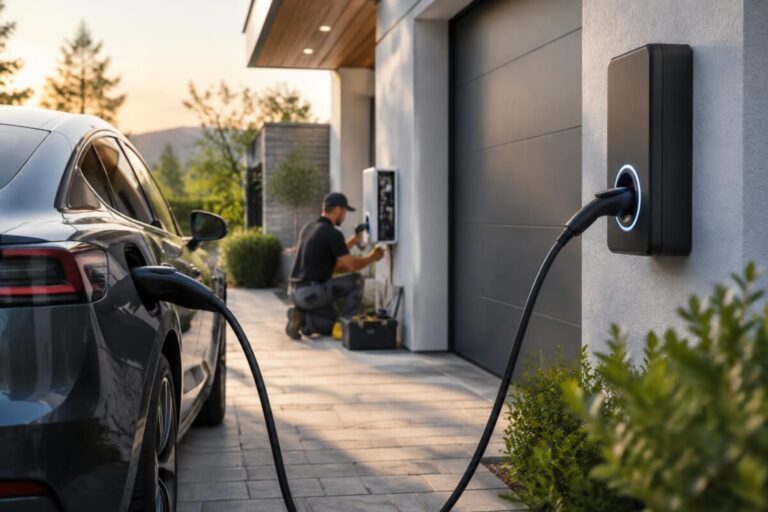
An independent garage can carry out routine maintenance as long as it follows the manufacturer’s plan. For the traction battery and high-voltage components, make sure the workshop has the appropriate certification. Information about developments in workshops specializing in EVs can also help you understand what work can be carried out.
Video: useful checks for an electric car
This video search helps you visualize common inspection steps and the items to have checked by a professional.
Practical questions about EV servicing
Is a quick service enough to maintain an electric vehicle?
It’s enough for a targeted inspection if the relevant items are checked. It doesn’t replace the service specified in the maintenance schedule or tasks that are due.
What is often overlooked when servicing an EV?
The cabin air filter, 12 V auxiliary battery, condition of the brakes, and fluid service intervals are sometimes overlooked. Make sure they’re included in the report.
Do the brakes need to be checked if regenerative braking is used?
Yes. Regenerative braking often reduces pad wear, but the discs, calipers, and system operation must still be checked.
Can you carry out some checks yourself?
Yes, such as checking tire pressure, lights, or windshield wipers. Any work on the traction battery or high-voltage circuit must be entrusted to a qualified professional.
Thanks for reading; Best regards; Xérian