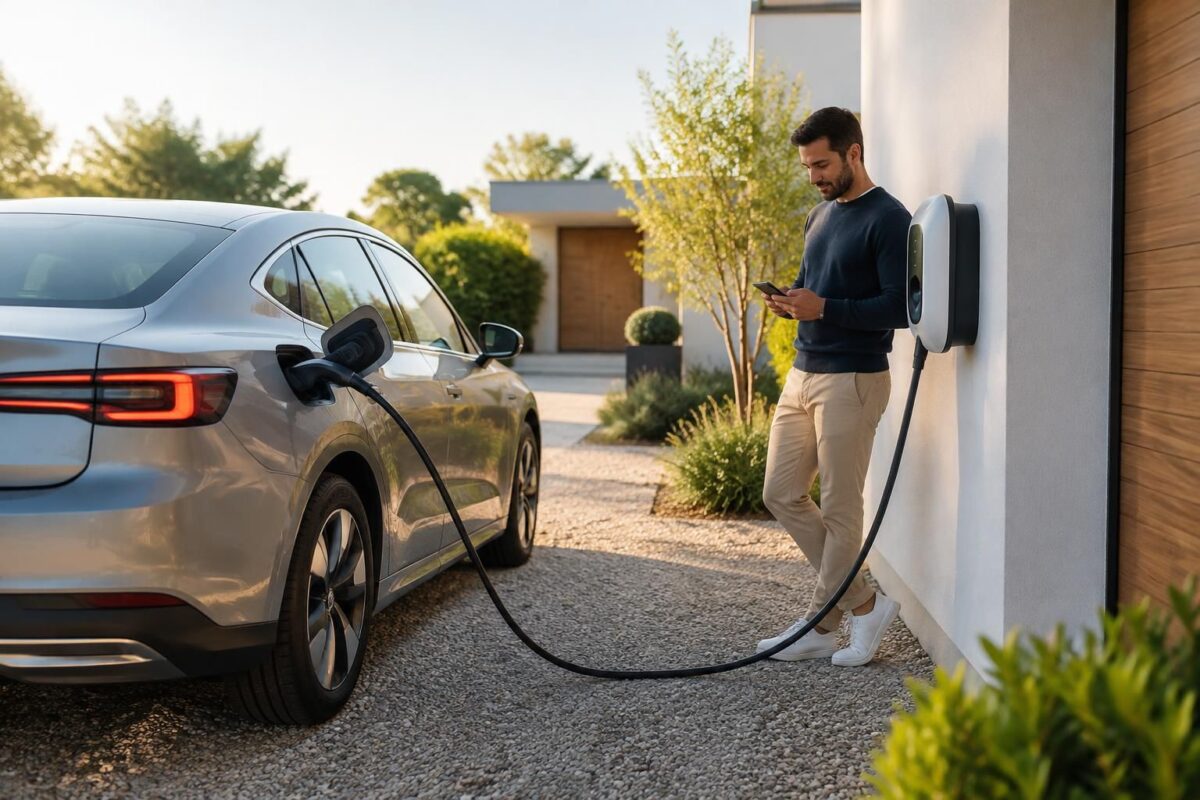
EV charging: which charger will put your mind at ease?
Hello, it’s Xérian. For most households, a 7.4 kW single-phase charger offers the best balance of charging convenience, cost, and simplicity.
The right choice depends mainly on how you use it, the charging power your electric car can accept, and your electrical installation. Here’s how to find a reliable home charging solution without paying for unnecessary power.
Good habits to adopt
- Check the maximum AC power your vehicle accepts in its manual or technical specifications.
- Identify your power supply: single-phase or three-phase, and the power available at the meter.
- Assess your journeys: a few dozen kilometers a day don’t call for the same charger as intensive use.
- Compare the full cost: equipment, wiring, protection devices, and any work needed on the electrical panel.
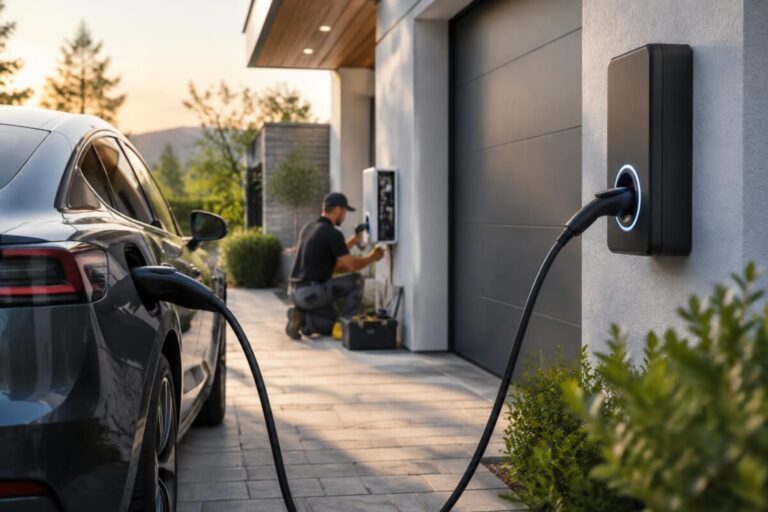
- Get a quote for the installation from an IRVE-qualified professional for a charger above 3.7 kW.
Charging speed doesn’t depend on the charger alone: the vehicle’s onboard charger may limit the charging power. To better understand charging habits, see this guide on fully charging the battery and our overview of everyday fast charging.
Which charging station suits your needs?
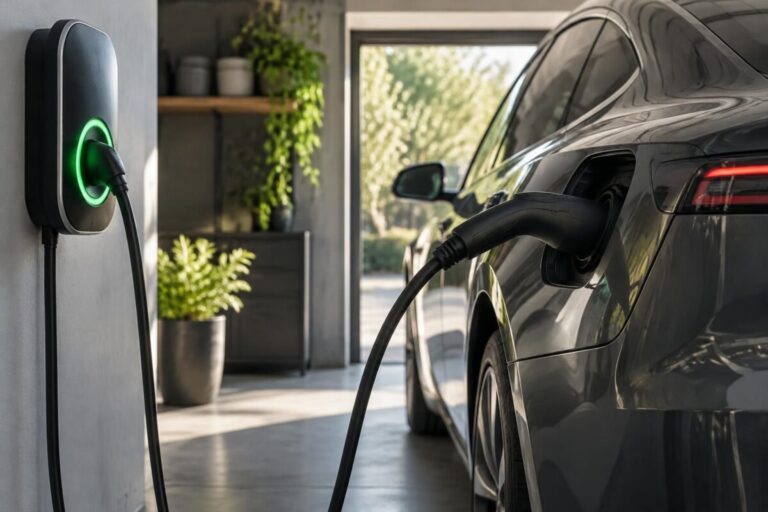
For overnight EV charging, a 7.4 kW single-phase charger suits many drivers. It can generally replenish a significant portion of the battery overnight, depending on its capacity and the vehicle’s limits.
A reinforced socket, limited to around 3.7 kW, remains an affordable option for a plug-in hybrid or short daily journeys. An 11 kW three-phase charger may be worthwhile if you drive a lot and both the car and the home are compatible.
| Solution | Indicative power | Suitable for | Key takeaway |
|---|---|---|---|
| Reinforced socket | Up to 3.7 kW | Low-mileage driver, plug-in hybrid | Inexpensive, but slow |
| Single-phase charger | 3.7 to 7.4 kW | Typical daily use | Often the best home-charging compromise |
| Three-phase charger | 11 to 22 kW | High-mileage driver or fleet | Choose only if the installation and car can handle it |
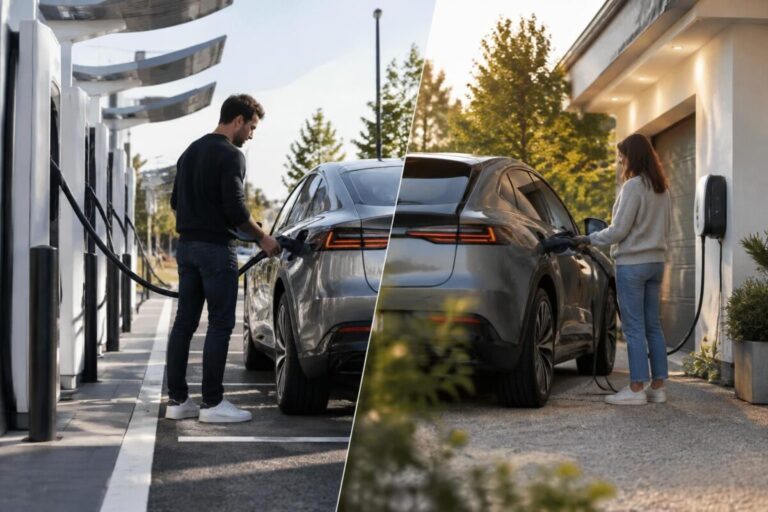
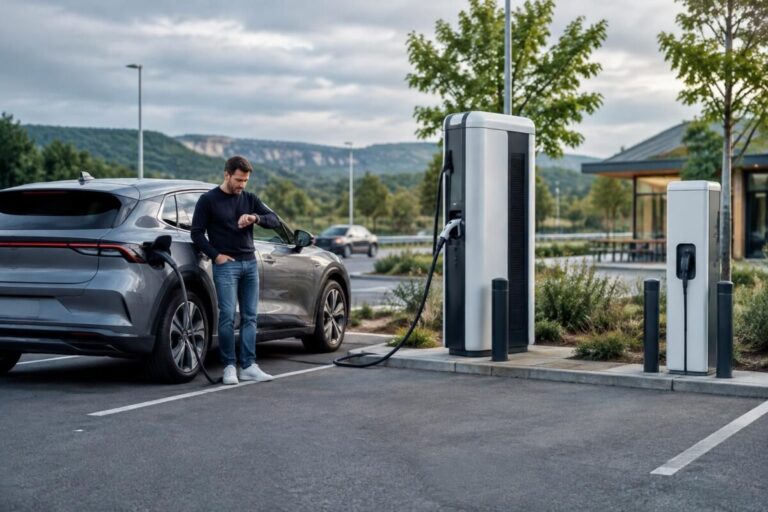
| Public fast charger | About 50 to 350 kW | Long journeys | Fast charging, generally more expensive per kWh |
A more powerful charger doesn’t guarantee faster charging
A 22 kW AC charger will deliver that power only if the car’s onboard charger can accept it. Many models are limited to 7.4 or 11 kW on AC power: in that case, installing a more powerful charger won’t shorten charging time.
As a rough guide, a 50 kWh battery would theoretically take nearly 7 hours at 7.4 kW or 4 hours 30 minutes at 11 kW. In practice, actual power, losses, and battery management affect these times. A DC fast charger, meanwhile, is mainly for use on the road: temperature and charge level also affect speed.
Example: Lina drives 45 km a day and charges every night. A 7.4 kW charger gives her plenty of headroom, while a 22 kW unit would be unnecessary if her car is limited to 11 kW on AC.
Electrical installation and budget: essential checks
Single-phase power is common in homes and is generally suitable for a charger up to 7.4 kW. Three-phase power offers more capacity, but setting it up may require changing your electricity plan, balancing the phases, or carrying out additional work.
As a rough guide, the installation costs quoted for a 7.4 kW single-phase charger often range from €800 to €1,300, while those for a three-phase installation range from €1,200 to €2,000. The distance between the electrical panel and the charger, cable size, and required protection devices all affect the quote. A reinforced socket costs less to install, but won’t suit every use case.
For installations above 3.7 kW, French regulations require the work to be carried out by an IRVE-qualified professional. The circuit must be dedicated and fitted with protection devices suited to the charger; the choice depends on the equipment and setup. A compliant installation reduces the risk of overheating and tripping while protecting the equipment.
If you have solar panels, a charger with dynamic load management can adjust charging to match solar production and household consumption. A few kilowatts of production may not be enough to power a high-capacity charger on its own, but the adjustment can help increase self-consumption.
Three steps to make the right choice
- Check your car’s specifications: note its maximum AC power and, if necessary, its DC charging capacity.
- Have your home assessed: single-phase or three-phase supply, meter capacity, cable length, and required protection devices.
- Compare detailed quotes: choose a charger suited to your journeys and have the work done by a qualified professional when required by regulations.
This approach helps you avoid confusing the advertised power with the power actually available. For typical home use, a properly sized charger often offers more peace of mind than an overpowered unit.
Practical questions about home charging
Is a 7.4 kW charger enough for an electric car?
For many drivers who charge overnight, yes. However, check that the vehicle can accept this power on AC and that the electrical installation is compatible.
Can a reinforced socket replace a charger?
It may suit a low-mileage driver or a plug-in hybrid. With power of up to around 3.7 kW, charging takes longer than with a wallbox.
Should I choose a 22 kW three-phase charger?
Not necessarily. The home and car must be compatible, and many vehicles cannot make use of 22 kW on AC power.
Is a fast charger suitable for everyday charging?
DC fast chargers are mainly useful when travelling and on long journeys. At home, an AC charger is generally better suited to regular charging.
Thanks for reading! Feel free to share your thoughts in the comments. — Xérian