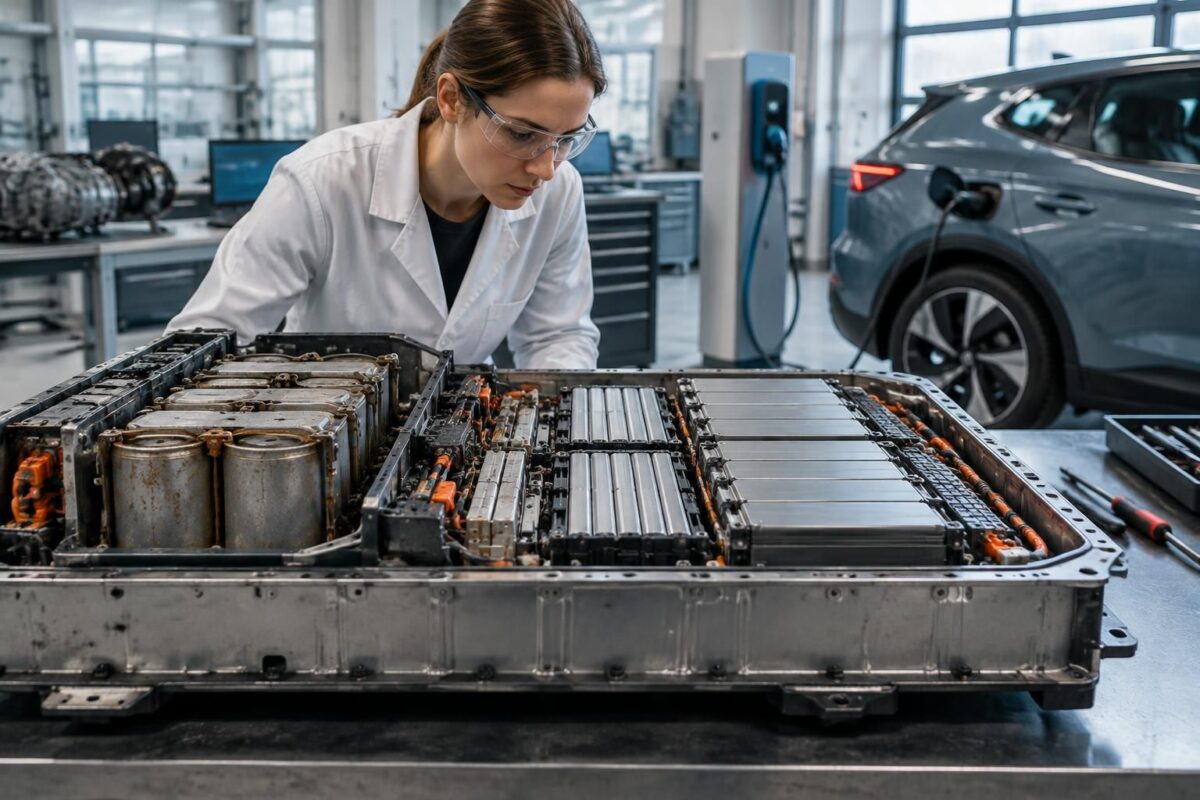
EV battery: discreet progress or truly visible change?
Hello, this is Xérian. The progress of EV batteries is real, but it is mostly seen in cost, charging and lifespan, not yet in a revolution that would transform every trip. By 2026, lithium-ion technology remains the reference, while LFP batteries are gaining ground and solid-state batteries are still moving toward broader production. To choose a car today, therefore look at the available performance, not just the promises announced. It’s often here that the everyday difference is made.
TEST IT NOW
- Compare the advertised electric range with your usual trips, not with a best-case test record.
- Check the charging power actually supported by the model, for DC charging as well as at home.
- Look at the battery warranty and the conditions related to its remaining capacity.
- Compare the cost of the batteries and the overall price of the cars, not just the sticker price.
- Ask if the model uses an LFP chemistry or another lithium-ion battery, then check what this changes for your usage.
EV batteries: tangible progress, but no immediate breakthrough
Advances are often discreet. A car can gain a little range, better manage heat, or accept a more regular charging pattern without its battery changing its technological family. For the driver, these improvements matter: they can reduce stops and make usage simpler.
Energy density remains a central criterion: it indicates the amount of energy stored for a given weight or volume. But a denser battery is not automatically the best choice. Price, thermal safety, lifespan, and ease of charging matter just as much.
If you compare two models, also examine their running costs and standard equipment. This guide on the cheapest electric cars to keep helps to place the battery within the overall budget.
Lithium-ion, LFP and NiMH technology: useful differences
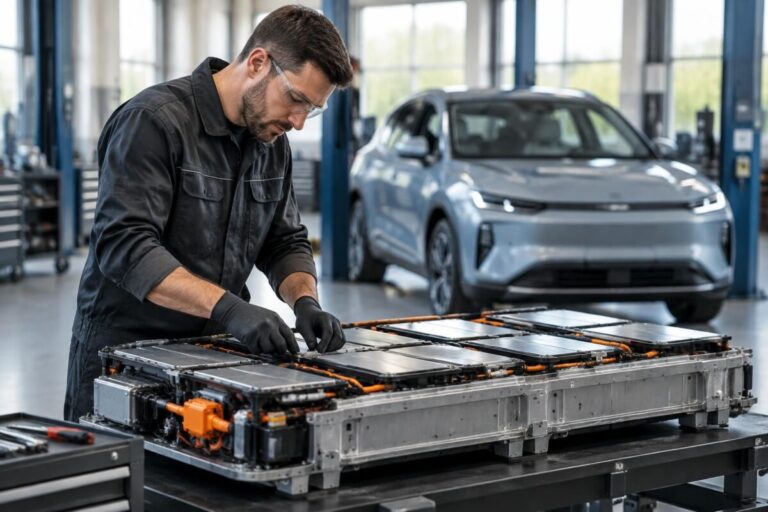
Lithium-ion technology dominates electric vehicles thanks to its good balance between weight, capacity and performance. It brings together several chemistries: lithium-ion NMC batteries, for example, often favor high energy density, while LFP are valued for their cost and thermal stability.
LFP batteries are progressing and becoming more competitive. They can suit a car used every day, especially if price and robustness take precedence over maximum range. They are not immune to heat, cold or poor charging management.
Nickel-metal hydride batteries, or NiMH, remain mainly present in hybrid cars. Their safety and reliability have proven themselves, but their weight and lower energy density make them less suited to modern fully electric cars.
| Technology | Main advantage | Aspect to verify |
|---|---|---|
| Lithium-ion NMC | Often high energy density | Cost and thermal management |
| LFP | Cost and thermal stability appreciated | Range depending on model and conditions |
| NiMH | Reliability in hybrids | Weight and energy capacity more limited |
| Sodium-ion | Use of more abundant raw materials | Energy density still lower than lithium-ion |
If it’s a compact car for daily trips, an LFP can be a coherent choice. If it’s a car meant for frequent long journeys, primarily compare highway range and the model’s charging speed.
Batteries to the solid-state: a promise to watch without waiting
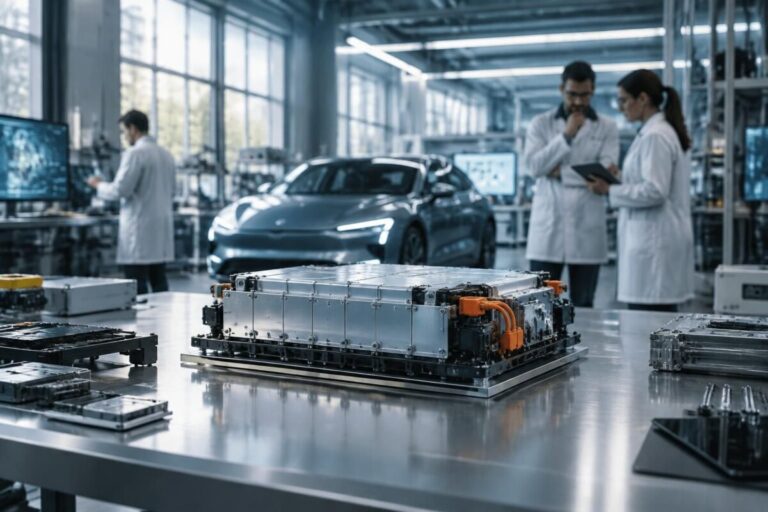
Solid-state batteries replace the liquid electrolyte with a solid material. This approach could improve safety and energy density, potentially leading to lighter batteries or higher range. Manufacturers, including Toyota and BMW, are investing in this path.
There are still important steps before broad-scale adoption: manufacturing these batteries in volume, controlling their cost, and ensuring their lifespan under real-world conditions. The timelines announced by manufacturers therefore do not mean that all vehicles will be equipped soon.
In practice, waiting for the perfect battery can delay a useful purchase. To take stock of announcements and limits, see what you really should expect from the miracle battery.
Fast charging: the minutes gained depend on the whole chain
Silicon-enriched anodes and new cell designs could speed up charging. But a promise of charging in under ten minutes does not yet describe the overall experience: the battery, the temperature, the charger and the charging curve all influence the time spent at the station.
A common mistake is to compare only the maximum power displayed. A car can reach it briefly, then slow down. To estimate a realistic stop, look at the time needed to go from one charge level to another, in the conditions that match your trips.
Step 1: note the distance you drive on a typical day and on a long trip. Step 2: compare usable range, charging power and the presence of charging stations on your routes. Step 3: check home or work charging, as an accessible outlet often changes daily life more than a punctual gain of a few minutes.
To know if home charging is realistic, you can also compare the models that benefit the most from home charging.
Durability, recycling and second life of batteries
Lifespan depends on the chemistry, the climate, charging habits and the thermal management system. A battery generally does not stop working abruptly: its capacity gradually declines. Warranties and model-specific data provide more useful benchmarks than a single rule in kilometers.
Recycling and second life also become increasingly important. A battery that no longer suits a car can sometimes be used for stationary storage before being recycled. These solutions can limit the need for new raw materials, but they do not eliminate the impact of manufacturing.
A simple gesture helps preserve the battery: avoid leaving it at full charge or nearly empty when the manufacturer recommends an intermediate range. To understand the effects of climate, here is a practical note on the heat and wear of batteries.
The next step in automotive innovation is not limited to new chemistry. It also depends on batteries that are easier to produce, repair and recycle. It’s a less spectacular advance, but essential to the energy transition.
The questions to ask yourself before choosing an EV battery
Will solid-state batteries replace lithium-ion?
Not immediately. They offer interesting potential, but their mass production, cost and durability still need to progress. Lithium-ion batteries should remain widely used for several years.
Is an LFP battery still preferable?
No. It can be interesting for its cost and its thermal stability, but the choice depends on the model, the required range and usage conditions. Compare the real characteristics of the vehicle.
Is charging in under ten minutes already common?
No. Some advances aim for this level, but the time depends on the car, the charger, the temperature and the charging window. The advertised performances do not always correspond to a full stop this short.
How to estimate the lifespan of a battery?
Consult the manufacturer’s warranty, coverage conditions and the model’s specific information. Capacity generally declines over time, with evolution influenced by usage and climate.
Thanks for reading. Best regards, Xérian